

Denim fabric is a strong cotton textile with a twill weave that creates a diagonal rib pattern. Denim uses indigo-dyed warp and white weft yarns, resulting in its iconic blue-and-white look. The denim fabric description highlights its strength, texture, and durability, making it an ideal choice for clothing and bags. The manufacturing process starts with dyeing warp yarns in indigo. These are woven with undyed weft yarns using a 3x1 right-hand twill weave. The method produces a rigid, abrasion-resistant material. Modern versions blend cotton with polyester or spandex for added stretch.
Denim originated in Nîmes, France, in the 18th century. The term comes from “serge de Nîmes.” It gained popularity in the U.S. in 1873 when Levi Strauss and Jacob Davis incorporated it into their riveted pants. Denim shifted from workwear to fashion and later evolved into various products, including tote bags.
Raw denim, heavyweight, midweight, and lightweight are the common types of denim. Polydenim incorporates synthetic fibers to improve flexibility and performance. Each type serves different uses, depending on durability and comfort. Denim fabric has the benefits of strength, style, and reusability. Totes made of denim are durable, visually appealing, and offer high load capacity. Its aging effect and eco-friendly nature make it a practical and fashionable choice. The overview defines what is denim while highlighting its properties, history, production, and modern uses across fashion and accessories.
Tote Bag Factory’s Denim Bags
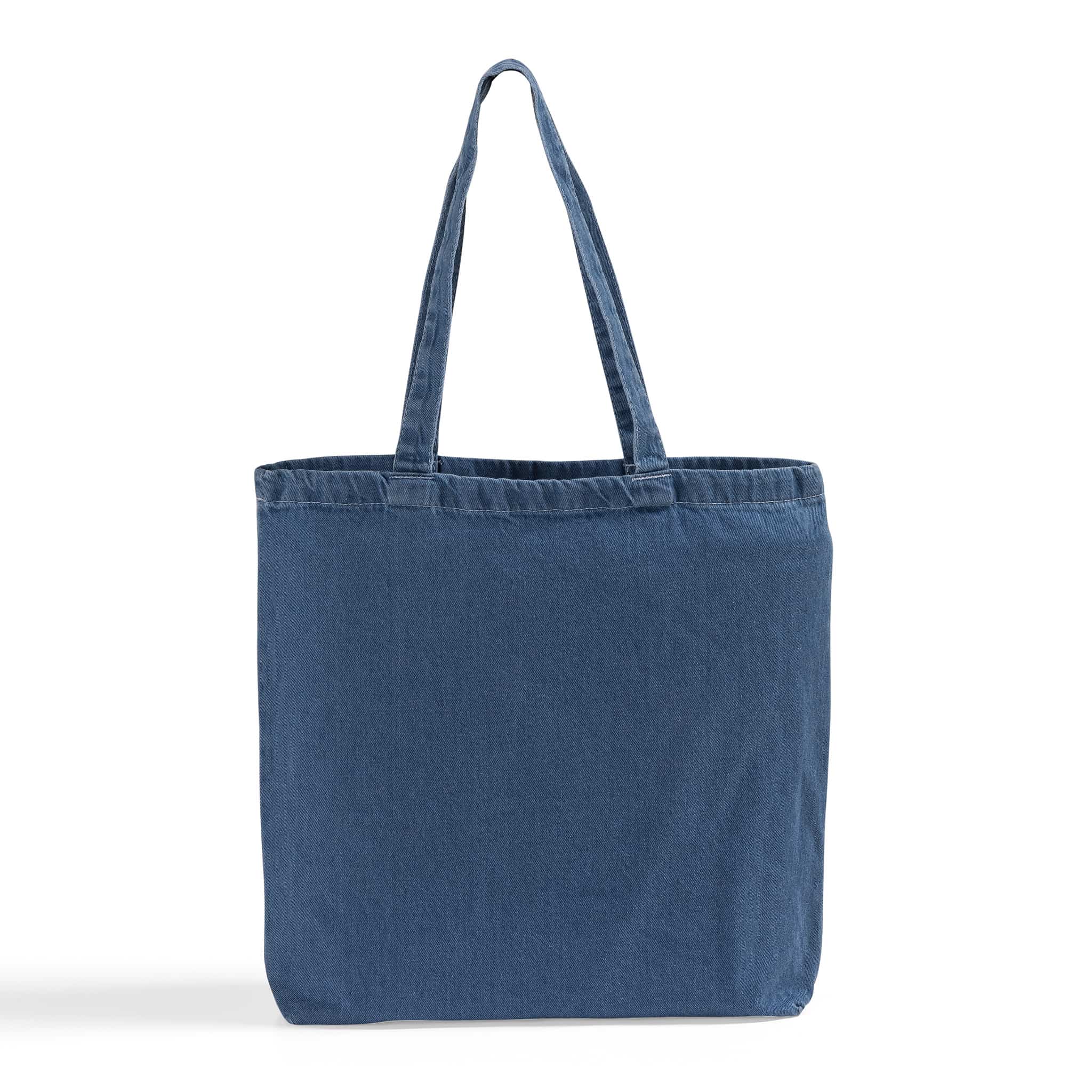
From $5.44
Color Options:
Black Natural Washed Denim Red
What Material is Denim Fabric made of?

Denim fabric is made of tightly woven cotton yarns arranged in a twill weave, creating a visible diagonal rib pattern. The warp yarns are dyed with indigo, while the weft yarns remain white, resulting in denim’s classic blue front and lighter reverse side. The twill structure gives denim strength, durability, and resistance to tearing.
The answer to the question, “what is denim made of?”, depends on the specific type. Traditional denim is composed of 100% cotton. Stretch denim is a type of denim that includes cotton blended with spandex or polyester for added flexibility. Polyester denim mixes synthetic fibers with cotton to increase strength and reduce shrinkage. Tencel denim combines lyocell, a plant-based fiber, with cotton for an eco-friendly alternative that remains soft and breathable.
How is Denim Fabric Made?
Denim fabric is made from cotton fibers harvested, cleaned, and spun into yarn. Synthetic fibers like spandex are blended with cotton to create stretch denim. The yarn used for the warp is dyed with indigo, while the weft yarn remains white. Dyeing methods like rope dyeing ensure denim's deep color and signature fading look.
The dyed warp yarns undergo warping and sizing to prepare them for weaving. The yarns are then interlaced on looms using a twill weave, producing a Woven Fabric with a diagonal rib pattern. The method is central to how is denim made, giving denim its strength and distinctive texture. The fabric undergoes finishing processes like sanforization or special washes after weaving to reduce shrinkage and create styles.
Denim is manufactured in major production centers including India, Pakistan, China, Turkey, and Italy. These regions have strong textile industries specializing in large-scale and premium denim production.
Is Denim made from Organic Cotton?
Yes, denim is made from organic cotton. The type of denim is known as organic denim fabric and is produced using cotton grown without synthetic pesticides, fertilizers, or toxic chemicals. Crop rotation, natural pest control, and water-efficient irrigation systems are the organic farming practices that minimize environmental harm and promote biodiversity.
The production of organic fabrics supports sustainable agriculture and benefits farming communities by preventing the use of harmful chemicals and encouraging fair labor practices. It uses less water than conventional cotton and produces softer, more breathable denim. Manufacturers certify organic denim through the Global Organic Textile Standard (GOTS) or the Organic Content Standard (OCS) to ensure authenticity and quality.
Denim is fundamentally a cotton-based textile created using a specific twill weave structure. The answer to the question, “Is denim cotton?” is yes. Traditional denim and its organic variations are composed of cotton fibers.
What are the Types of Denim Fabrics?
The types of denim fabrics are listed below.
- Raw Denim: Raw Denim is unwashed, untreated fabric that fades naturally over time, developing personalized wear patterns.
- Selvedge Denim: Selvedge Denim is woven on shuttle looms with clean-finished edges to prevent fraying. It is known for its tight weave and durability.
- Stretch Denim: Stretch Denim is blended with elastic materials like spandex or Lycra to offer flexibility, comfort, and improved fit.
- Acid Wash Denim: Acid Wash Denim is treated with chemicals to create a dramatic, high-contrast faded appearance and is used in vintage fashion.
- Poly Denim: Poly Denim is blended with Polyester Fibers for added strength, wrinkle resistance, and a smooth, soft finish. It is used in shirts and outerwear.
- 100% Cotton Denim: 100% Cotton Denim is traditional denim made entirely from cotton, offering breathability and lasting durability.
- Fox Fiber Denim: Fox Fiber Denim is crafted from naturally colored organic cotton without dyeing, featuring natural earth tones like redwood and coyote.
- Corduroy Denim: Corduroy Denim is a hybrid fabric that combines denim’s structure with corduroy’s soft, ridged texture. It is used in casual jackets and pants.
- Ramie Denim: Ramie Denim is blended with ramie plant fibers to create a breathable, slightly glossy fabric with a unique texture.
- Linen Denim: Linen Denim is made from a cotton and linen blend. The fabric is light and breathable, ideal for warm-weather garments.
- Lyocell Denim: Lyocell Denim is produced using bamboo or wood-based sustainable fibers, offering a soft feel, breathability, and eco-friendliness.
- Sanforized Denim: Sanforized Denim is pre-treated to prevent shrinkage after washing, making it more stable and easier to maintain.
- Colored Denim: Colored Denim is dyed in non-indigo shades like black, gray, green, or pink using sulfur dyes for various style options.
- Ecru Denim: Ecru Denim is an undyed and unbleached fabric that retains its natural off-white cotton color.
- Bull Denim: Bull Denim is a heavyweight, tightly woven 3x1 twill fabric used for upholstery, heavy-duty clothing, and workwear.
- Thermo Denim: Thermo Denim is lined with insulating fabric for warmth, making it suitable for cold-weather garments.
- Organic Denim: Organic Denim is a sustainable choice among the types of denim. It is made from 100% organic cotton and treated without harmful chemicals.
- Bubblegum Denim: Bubblegum Denim is an elastic denim with up to 50% stretch, used in women’s fashion for a body-hugging fit.
What is the Natural Color of Denim?
The natural color of denim is a light beige or off-white shade known as ecru. Ecru reflects cotton's undyed appearance, the primary fiber in denim fabric. Denim does not have the characteristic blue tone in jeans in its raw form.
Indigo dye creates the classic blue denim color. Indigo coats the surface of the cotton yarns without deeply penetrating them, causing denim to fade attractively with wear. Traditional dye came from the Indigofera plant, but modern denim uses synthetic indigo for consistency and cost efficiency. Blue jeans are made from 100% cotton woven in a twill weave, which provides durability and texture. Synthetic fibers like spandex or polyester are used in denim blends to add stretch or strength.
Denim comes in various colors beyond blue, including light blues, deep indigos, black, gray, and green. Different dyeing techniques, including sulfur dyes and natural pigments, achieve these denim color variations. Eco-friendly innovations have introduced plant-based dyes to reduce environmental impact. The final color and look of denim depend on wash treatments and aging processes.
What is Denim used for?

Denim fabric is used for various purposes due to its durability, strength, and versatility. The fabric is made from cotton woven in a twill pattern, featuring a diagonal ribbing that resists tearing and abrasion, making it ideal for everyday wear and heavy-duty applications. Common denim uses include jeans, jackets, skirts, overalls, workwear, accessories such as bags and hats, and home decor items like upholstery and cushion covers. Its ability to form different silhouettes and suit casual and semi-formal styles enhances its appeal across social and fashion contexts. Denim offers comfort, performs well in various climates, and develops unique character over time, requiring minimal maintenance. The fabric's longevity contributes to sustainable fashion by reducing the need for frequent replacements.
Denim is used for various purposes listed below.
- Jeans: The most common and iconic use of denim is for making jeans, durable and stylish pants worn worldwide.
- Jackets: Denim jackets are popular outerwear for their rugged look and durability. They are worn casually or as a fashion statement.
- Bags and Backpacks: Denim is used to create a variety of bags, including totes, handbags, backpacks, and cross-body bags. Its resilience makes it ideal for items subjected to regular use, and it adds a trendy, casual touch. Choosing the Fabric Material for Bags depends on its strength and versatility.
- Accessories: Denim is fashioned into hats, belts, shoes, gloves, and jewelry, such as bangles, bracelets, earrings, necklaces, and brooches. These accessories combine style and durability, making denim a fashionable choice beyond clothing.
- Workwear: Denim was initially favored for workwear due to its toughness and comfort, making it suitable for labor-intensive jobs.
- Homewares and Upholstery: Denim is used in home decor items like curtains, cushion covers, upholstery, blankets, pillows, and furniture coverings. It adds a rustic, cozy aesthetic to living spaces and is appreciated for its durability.
- Footwear: Denim is used in making shoes and boots, offering a stylish alternative to traditional materials while maintaining the fabric’s natural appeal.
- Upcycled Denim Products: Sustainable fashion has adopted upcycled denim to craft trendy bags, wallets, pouches, and jewelry, showcasing denim’s versatility and eco-friendly potential.
Is Denim a Good Material for Clothing?
Yes, denim is a good material for clothing. Denim is made from tightly woven cotton fibers, utilizing a twill weave, which provides exceptional strength and durability. Denim cloth is resistant to wear and tear, making it ideal for clothes worn frequently, such as jeans and jackets. The breathable qualities of denim clothes make them comfortable and breathable despite their toughness, offering air circulation that regulates temperature and controls moisture. The fabric is versatile, aging gracefully and developing a unique character. Denim is easy to maintain, requiring minimal care while retaining its shape and appearance. Its durability promotes sustainability by reducing the need for frequent replacements.
Is Denim Fiber a Good Choice for Bags?
Yes, denim fiber is a good choice for bags. Denim is durable, strong, and maintains its structure even under heavy loads, making it ideal for carrying books, laptops, and other essentials. Its timeless aesthetic ensures that denim bags remain stylish across trends, making them appealing for various design styles. Distressed, stone-washed, or acid-washed are the ways to finish denim, offering unique textures. It is blended with leather or canvas for distinctive designs. Denim bags are machine-washable and resistant to shrinking, adding practicality. Using recycled denim contributes to eco-friendly fashion choices.
Denim fabric is exceptionally durable, making it perfect for heavy use. Its timeless style ensures that bags stay fashionable, and its versatility allows for various finishes and design combinations. Denim is easy to maintain, machine-washable, wrinkle-resistant, and low-maintenance. Its sustainability appeals to eco-conscious consumers when made from recycled materials. Denim is used in various bags, including best tote bags, backpacks, handbags, and shopper bags.
Can Denim Jeans be Recycled into a Bag?
Yes, denim jeans can be recycled into a bag. Old jeans material is strong, versatile, and easy to repurpose, making it suitable for crafting various bag styles such as totes, crossbody bags, and handbags. The process of how are jeans made into a bag involves cutting usable sections like pant legs or back panels, reinforcing seams, and adding straps or closures. The sturdy fabric provides structure, allowing built-in elements like pockets and zippers to be reused, which adds functionality and reduces waste.
A denim-made recycled bag is durable, withstands regular usage, and carries weight without causing damage. The fabric's classic texture lends bags a stylish, casual appeal, making them suitable for everyday wear. Recycling denim supports sustainability by reducing landfill waste and conserving the water and energy required to produce new textiles. These qualities make denim a practical and eco-friendly choice for creative upcycling projects.
What are the Characteristics of Denim Fabric?

The characteristics of denim fabrics are listed below.
- Texture: Denim has a rugged, coarse texture with diagonal ribbing created by its twill weave, providing a strong, structured feel.
- Fading: Denim fades naturally over time at stress points like knees and thighs, resulting in a personalized, worn-in look.
- Stiffness: The fabric starts stiff but gradually softens with washing and wear, eventually molding to the body's shape.
- Composition: Denim is made from 100% cotton, though some versions are blended with elastane or polyester to add stretch and comfort.
- Twill Weave: Denim's signature twill weave gives the fabric diagonal ridges that enhance durability and give it a distinctive appearance.
- Color: Traditional denim is dyed with indigo on the warp yarns while the weft remains undyed, producing the iconic blue exterior and lighter interior.
- Durability: One of the denim fabric characteristics is its strong resistance to wear and abrasion, making it ideal for everyday use and durable workwear.
- Weight: Denim comes in various weights, from lightweight for shirts and dresses to heavyweight for jeans and jackets, affecting comfort and use.
- Elasticity: Stretch denim includes fibers like elastane, offering improved movement and a snug fit without losing shape.
- Breathability: Denim allows airflow despite its density because of its cotton content and weave structure, keeping it relatively breathable.
- Shrinkage and Wrinkle Resistance: Pre-washed denim resists shrinking and creasing, while raw denim shrinks slightly to achieve a custom fit.
- Versatility: Denim is used for clothing, accessories, and home decor due to its functional and stylish nature.
- Cultural Significance: Denim has become a fashion icon, linked to casual style, rebellion, and timeless trends across generations.
What are the Properties of Denim Fabric?
The properties of denim fabrics are listed below.
- Durability: Denim is strong and long-lasting, ideal for frequent wear and heavy-duty use. It is one of the most valued denim properties in fashion and workwear.
- Tensile Strength: The tightly woven twill structure and strong cotton yarns give denim high tensile strength, allowing it to resist tearing and stress under pressure.
- Abrasion Resistance: The dense weave and tough fibers make denim resistant to surface wear, contributing to its longevity.
- Shrinkage: Raw denim shrinks after washing, but pre-washed denim is treated to resist shrinkage and maintain fit.
- Breathability: The cotton content and weave allow air circulation, providing comfort even with heavier weights.
- Weight: Denim comes in various weights, from medium to heavyweight, which affects its warmth, structure, and ideal use in different types of garments.
- Elasticity: Blends with elastane or spandex introduce stretch to the fabric, enhancing flexibility and comfort without compromising strength.
- Fading and Aging: Denim develops unique fading patterns with use, giving each piece a distinct, worn-in character over time, one of the signature properties of denim.
- Stiffness: New denim is stiff but becomes softer and more comfortable after repeated wearing and washing.
- Wrinkle Resistance: Pre-treated denim tends to resist wrinkling, making it easier to care for and maintain its appearance.
- Colorfastness: Denim dyed with indigo retains color on the yarn surface, resulting in gradual fading that defines its signature look.
- Versatility: Denim is used across garments and accessories due to its adaptability, strength, and timeless aesthetic.
What is the Fabric Weight of Denim?
The fabric weight of denim ranges from under 12 oz/yd² to over 16 oz/yd², depending on its classification. Lightweight denim weighs less than 12 oz/yd², midweight denim falls between 12 and 16 oz/yd², and heavyweight denim weighs more than 16 oz/yd². These weight categories determine the fabric’s thickness, durability, and suitability for various applications.
The denim fabric weight chart is shown below.
|
Weight Category |
Ounces (oz/yd²) |
Approximate GSM (g/m²) |
Typical Uses |
|
Lightweight |
<12 |
<400 |
Shirts, skirts, summer clothing |
|
Midweight |
12-16 |
400–545 |
Jeans, jackets, and versatile clothing |
|
Heavyweight |
>16 |
>545 |
Workwear, heavy-duty jeans, bags |
Heavyweight denim is preferred for bag-making due to its durability and ability to maintain its shape under significant weight. Denim weights over 16 oz are used for utility and tote bags, while denim ranging from 10 to 14 oz is used for casual or fashion bags when flexibility and easy handling are important. Denim in the 8–12 oz range provides enough strength for grocery totes while remaining manageable during sewing. These Fabric Weights help determine the best denim type for each specific project or use.
What does Denim look like?
Denim looks like a tightly woven cotton fabric with clear diagonal lines across its surface. Diagonal lines come from the twill weave construction, which gives the fabric its signature texture and pattern.
The front side of denim is colored with indigo dye, giving it a deep blue or faded blue appearance. The reverse side tends to be lighter, like white or pale gray, because the weft yarns remain undyed. Color variations, such as black, gray, or white, are common, depending on the type of dye used.
Typical denim fabric has a rugged and dense appearance. Fading and wear patterns develop over time in areas of frequent contact. These faded lines contribute to denim’s classic worn-in look seen on jeans and jackets.
Identifying denim fabric involves checking for visible diagonal ribs, color contrast between the front and back, and a stiff, thick texture. Denim initially feels heavy and durable, but becomes softer with repeated use and washing. The weave is dense, offering high resistance to stretching and tearing.
How does Denim differ from Cotton?
Denim differs from cotton in its weave, weight, and durability. Denim and cotton are made from cotton fibers, but denim uses a twill weave that creates a diagonal ribbing pattern, while standard cotton fabric uses a plain weave. The twill weave gives denim a denser, thicker structure, making it stronger and more durable than regular cotton fabric.
Denim is heavier, less breathable, and better suited for rugged use or colder climates. Cotton is lighter, more breathable, and more comfortable for warm-weather wear. Denim includes added fibers like elastane for stretch, while most cotton fabrics do not stretch and shrink with washing.
Denim vs. cotton highlights that denim offers strength, abrasion resistance, and long-lasting shape, while cotton provides softness, comfort, and flexibility. Denim is ideal for jeans, jackets, and bags, while cotton works better for T-shirts, bedding, and summer clothing. Denim feels stiff and hot, while cotton wears out faster and wrinkles easily.
Is Denim a Breathable Fabric?
Yes, denim is a breathable fabric. Denim consists of 100% cotton fibers woven in a twill pattern, allowing air to circulate. The weave promotes breathability, helping to regulate temperature and moisture. Denim allows for sufficient airflow despite its density and strength, noticeable after the fabric has been softened or pre-washed.
Denim is an excellent choice for shopping bags due to its durability. The firm weave and cotton composition make it resistant to wear and tear, which makes it ideal for carrying heavy loads. Its breathability helps maintain freshness by preventing moisture buildup. The fabric's classic, rugged style adds a fashionable touch to bags for shopping. Denim is made from raw or recycled materials, offering an eco-friendly option. The fabric is easy to care for, making denim bags durable and reusable.
Is Denim Fiber Natural or Synthetic?
Denim fiber is natural. Denim is made from 100% cotton yarns, a natural plant fiber. Cotton provides breathability, comfort, and durability. Modern denim incorporates synthetic fibers for added stretch or durability, but classic denim retains its natural properties due to its high cotton content.
Cotton is biodegradable, meaning denim fiber breaks down naturally without leaving harmful residues. It makes cotton-based denim an eco-friendly option for products like bags. It is a non-polluting fiber that supports sustainability and environmental preservation, unlike synthetic fibers.
Bags made from natural denim are known for their breathability, durability, and comfort. Cotton denim is biodegradable, making it an environmentally friendly choice. Denim is sustainable when sourced organically, reducing chemical use. It develops a unique aging effect over time, adding character to bags and making them an excellent material for biodegradable bags.

