

Jute fabric is a strong, durable natural fiber ideal for heavy-duty use. Jute fabric absorbs moisture, which makes it ideal for use in packaging and as covers for plants. Jute material is softened through grinding before being extracted, cleaned, dried, spun into yarn, and woven into fabric. The breathable nature of jute fabric makes it an excellent choice for clothing and home furnishings. Jute's fabric is softened through grinding before being extracted, cleaned, dried, spun into yarn, and woven into fabric. Jute has been used for centuries, originally for making ropes and sacks in India and Bangladesh. Burlap is a standard jute fabric for sacks, bags, and upholstery. Hessian is the finer version of jute that is used in clothing and décor. Jute silk offers a smoother option for fashion, and it creates a softer fabric when blended with cotton or polyester. Jute fabric is durable, affordable, and eco-friendly, perfect for industrial and fashion products. Its versatility makes it suitable for bags, ropes, and home décor, while its strength and breathability make it popular for tote bags. Jute's ability to prevent moisture build-up makes it great for carrying groceries or personal items, and its rustic look and durability make it a top choice for sustainable bags.
Tote Bag Factory's Jute Bags
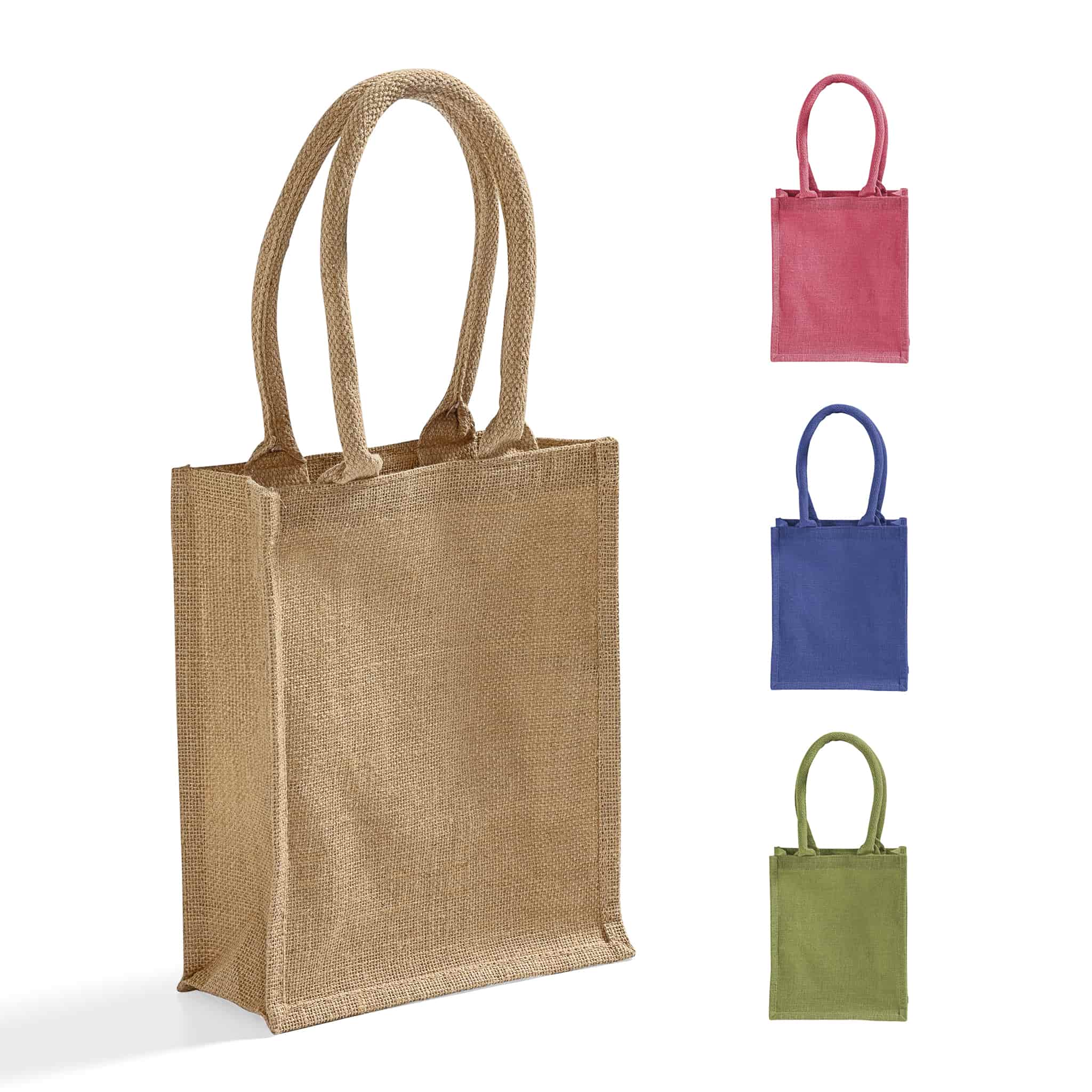
Jute Book Bag with Full Gusset
From $2.21
Color Options:
Natural Blue Pink Green
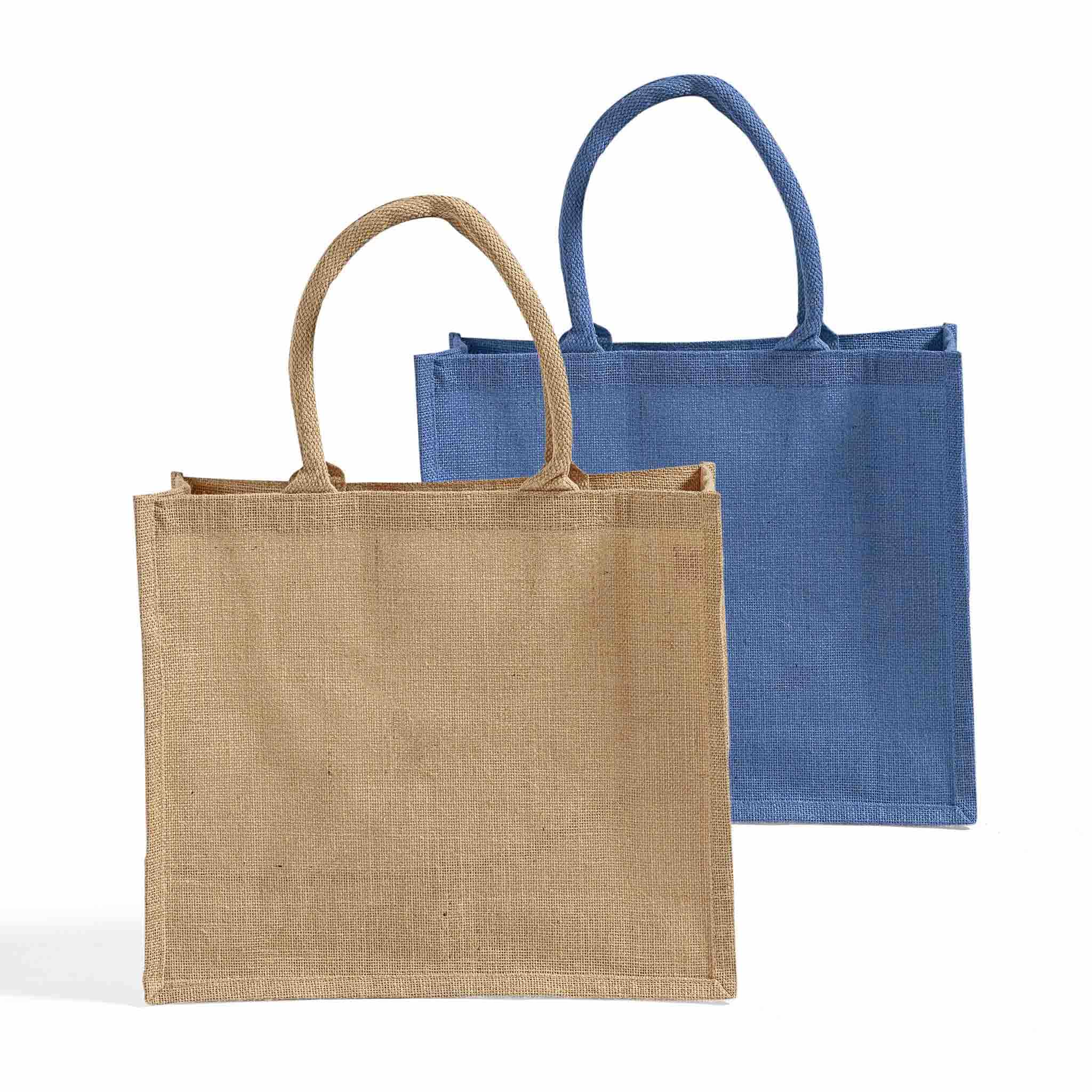
From $3.32
Color Options:
Natural Navy
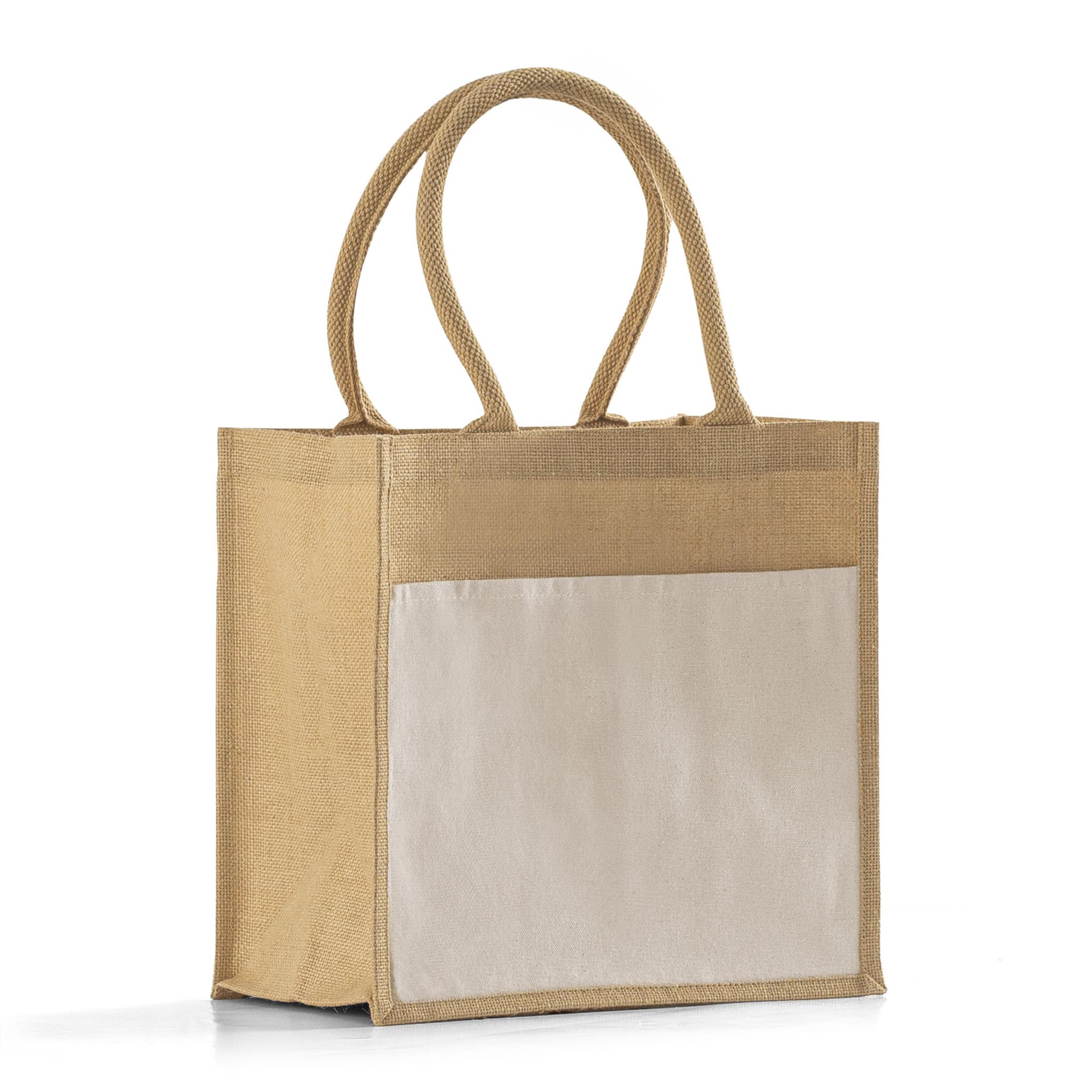
From $2.79
Color Options:
Natural
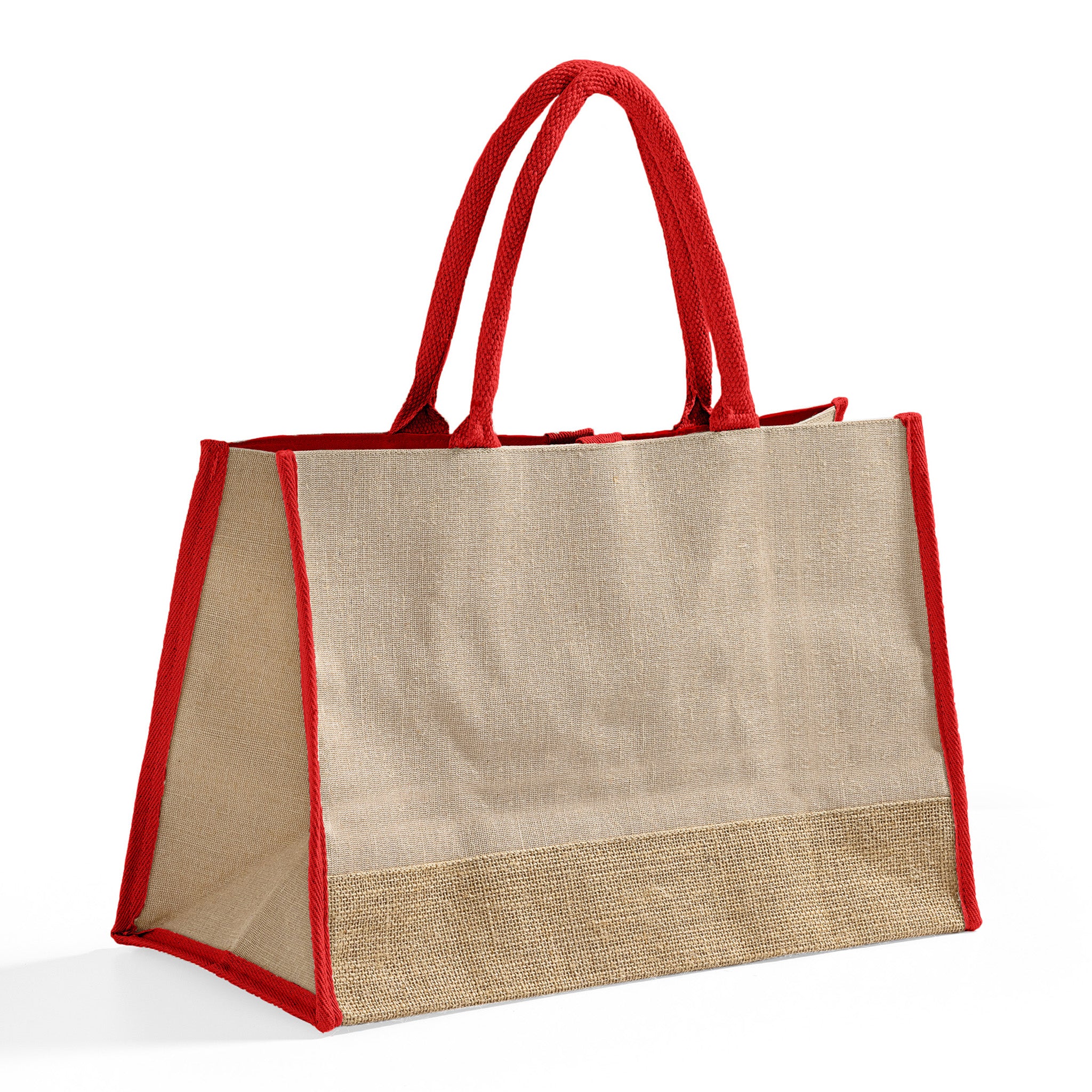
From $5.02
Color Options:
Natural Natural/Black Natural/Red
What Material is Jute Fabric made of?

Jute fabric is made from the natural fibers of the jute plant (Corchorus species), which are extracted by immersing the plant stalks in water. The fibers contain cellulose which is 60-70%, providing the fabric with strength, and lignin which is 5-20%, contributing to its stiffness. The resulting material has a rough texture, similar to burlap and hessian. Jute fabric is utilized for crafting sacks, bags, and furniture. It forms softer, more resilient fabrics when combined with cotton or polyester. A refined version of jute material, jute silk, appears in high-end fashion and decorative items.
How is Jute Fabric Made?
Jute fabric is made by harvesting the jute plant (Corchorus species), soaking its stalks in water (retting) to soften the bark, and extracting the fibers. Fibers are washed, dried, and spun into yarn. The yarn is woven into woven fabric with plain or twill weaves, creating a coarse texture. Final processing includes washing, dyeing, and softening to prepare it for various uses. Jute made from the plant is blended with fibers like cotton or polyester to increase its softness and durability. A refined version, Jute Silk, serves high-end fashion and decorative items.
Where is Jute Plant Grown?
The Jute plant grows in tropical and subtropical regions, with India and Bangladesh being the largest producers. Jute thrives in water-rich areas like riverbanks, wetlands, and floodplains with nutrient-rich soil. Jute requires a warm, humid climate with temperatures of 25°C to 35°C (77°F to 95°F) and consistent rainfall typical of monsoonal regions. Jute plants tolerate short flooding periods, making them suitable for flood-prone areas. Jute plants thrive in fertile, well-drained soils with a slightly acidic to neutral pH which is around 6 to 7, such as loamy or alluvial soils. Poor, rocky, dry, or cold soils hinder cultivation.
What is Jute used for?

Jute is used for making various products, including burlap, sacks, bags, and ropes. Jute's lightweight and sturdy nature suits everyday items and industrial uses. Jute's breathable texture works well for clothing and home furnishings. The fabric's rustic appearance enhances fashion items like tote bags. It absorbs dye well and retains strength when wet, making it suitable for bags, ropes, and geotextiles.
Jute is used for the things listed below.
- Bags: Jute fabric is a durable bag material strong enough to hold heavy items. Its biodegradable nature makes it an eco-friendly alternative to synthetic fabrics, appealing to environmentally conscious consumers. The rustic texture of jute provides a stylish, unique look to tote bags. Jute combines practicality with aesthetic appeal, ideal for casual and chic designs.
- Clothing: Jute fabric is breathable, allowing air circulation, and is ideal for lightweight clothing in warm climates. Jute uses as an eco-friendly fiber in fashion, attracting sustainable fashion enthusiasts. Jute garments become soft and comfortable after processing. They offer style and comfort for everyday wear.
- Home Furnishings: Jute is a versatile material for home furnishings. Jute is used to create durable, stylish rugs and carpets that enhance interiors with a natural, textured feel. Jute's strength makes it ideal for upholstery and cushion covers, providing comfort and longevity. Jute's popularity as a sustainable material grew among consumers seeking eco-friendly home decor options, making it a top choice for environmentally conscious homeowners.
- Industrial Use: Jute fabric is crucial in industrial applications like packaging. Jute produces sacks and bags for agricultural products. Jute fabrics' strength suits the production of heavy-duty rope and twine. The uses of jute in construction benefit from its durability and biodegradability, as it is used in geotextiles for soil erosion control and environmental protection projects.
- Furniture: Jute fabric provides upholstery for furniture, imparting a natural, rustic appearance with lasting durability. Jute serves as a padding material, offering eco-friendly comfort and high quality. Sturdiness and aesthetic appeal make jute a popular choice for sustainable furniture options.
- Agriculture: Jute fabric is a strong and biodegradable packaging material for sacks used to carry fertilizers, grains, and other agricultural products. Its breathable nature makes it an excellent choice for covering plants in nurseries or gardens, promoting healthier growth and providing an environmentally friendly alternative to synthetic materials.
- Arts and Crafts: Jute fabric's rustic look makes it popular in arts and crafts. Jute serves in do it yourself (DIY) projects, such as bags, wall hangings, and decorative items, offering a natural, organic appearance. Jute is a popular choice for eco-friendly gift wrapping, providing a unique and sustainable touch to presents. Jute fabric makes one of the best tote bags, combining durability with eco-conscious appeal, and it appeals to consumers who appreciate handmade and environmentally conscious crafts.
Is Jute Fabric Ideal for Clothing?
Yes, jute fabric is ideal for clothing and lightweight, breathable garments. Jute fibers allow air to circulate, making it an excellent choice for warm weather. Its eco-friendly qualities attract customers who are interested in sustainable fashion. Jute softens during processing, making it comfortable for everyday wear. Jute is an environmentally friendly option for fashion as a biodegradable material. Jute is not as soft as cotton or silk but is more suited for casual or summer wear than high-fashion pieces. Blending jute cloth material with other materials improves its softness and texture, broadening its use in clothing items.
Is Jute Fabric a Good Choice for Bags?
Yes, jute fabric is a good choice for bags. Jute fabric is durable and strong, capable of withstanding heavy loads. Jute is ideal for tote and shopping bags. Natural fibers resist wear and tear and maintain their quality over time. Jute is eco-friendly and biodegradable, attracting environmentally conscious consumers who aim to reduce plastic waste. Jute fabric's rustic and textured appearance adds aesthetic appeal, giving bags a stylish, natural look. Jute is less soft than cotton but becomes softer with use and processing, offering functionality and comfort. The Jute bags remain lightweight and sturdy, used in fashion, retail, and promotional items due to their versatility and sustainability.
What are the Characteristics of Jute Fabric?

The characteristics of Jute Fabric are listed below.
- Lightweight: Jute fabric is easy to handle and lightweight, so it does not add extra weight to bags and clothing, making them comfortable for daily use.
- Moisture Absorbent: Jute is highly effective at absorbing moisture, making it ideal for packaging materials and plant covers in nurseries and gardens. The moisture-absorbing qualities of jute are among the key jute fiber characteristics that boost its usefulness in various applications.
- Biodegradable: Jute fabric offers significant biodegradability. Jute breaks down naturally, making it a sustainable choice for reducing plastic waste.
- Breathable: Jute fabric promotes air circulation, making it breathable and ideal for clothing and home furnishings. Jute's properties keep items cool and comfortable in warm climates.
- Strong and Durable: Jute fibers offer significant strength, granting the fabric remarkable durability. Bags and ropes made from Jute endure heavy use and wear over time. These jute characteristics ensure longevity and reliability in products that withstand daily stress.
- Eco-Friendly: Jute is an eco-friendly, plant-based material alternative to synthetic fabrics. Jute cultivation requires minimal chemicals and pesticides, improving sustainability. The eco-friendly nature of jute makes it an attractive choice for buyers seeking sustainable fabric for bags and other items.
- Versatile: Jute fabric is versatile and suited for various applications, including fashion items like bags and clothing, and industrial uses such as ropes, sacks, and geotextiles.
Is Jute Fabric Waterproof?
No, Jute fabric is not waterproof, as it is highly absorbent due to its cellulose content. Water-resistant coatings improve jute's suitability for outdoor use, like beach bags. Jute's eco-friendly and biodegradable nature attracts customers seeking sustainable alternatives to synthetic materials. Jute withstands daily use, carrying sand, towels, and beach gear. Its breathable properties enable air circulation, keeping wet swimsuits from becoming musty. The natural, rustic look and lightweight feel make jute stylish and practical for beach bags.
Is Jute Natural or Synthetic?
Yes, jute is a natural fiber, derived from the Corchorus plant stalks. Jute is biodegradable, eco-friendly, and sustainable. Jute is strong and durable, carrying heavy items without breaking down, making it ideal for daily use. Its breathable nature enables air circulation and prevents moisture build-up, making it suitable for carrying groceries or personal items. Natural jute's rustic texture adds stylish appeal, attracting eco-conscious consumers seeking functional and attractive organic bags.
How does Jute differ from Burlap?
Jute differs from burlap because jute is a natural fiber derived from the Corchorus plant, while burlap is a fabric made from coarse fibers, including jute and hemp. Jute has a finer, softer texture, which makes it ideal for consumer products such as bags and home furnishings, while burlap's thicker fibers are better suited for industrial uses like sacks and agricultural applications. Jute is golden to light brown, while burlap tends to have darker shades, ranging from light brown to grayish, depending on the fiber and its processing. Jute and burlap are biodegradable and eco-friendly materials. Burlap is strong and durable, making it great for packaging and upholstery, while jute's softer texture is perfect for decorative items, clothing, and lighter products. Jute and hemp are natural fibers but come from different plants and have distinct properties. The hemp fabric is stronger and more durable than jute and is used in products requiring extra toughness.
Are Jute and Burlap Fabrics Eco Friendly?
Yes, jute and burlap fabrics are eco-friendly because they are made from natural, biodegradable fibers. Jute originates from the Corchorus plant and requires minimal pesticides and fertilizers. Jute represents a sustainable environmental choice. Burlap is made from jute or hemp, which offers similar benefits as a natural material. Jute and burlap fabrics decompose naturally, releasing no harmful pollutants. Synthetic materials cause significant environmental damage. Jute and burlap are renewable resources that are regrown every year. Production processes remain energy-efficient, require fewer chemicals than conventional textiles, and are less environmentally harmful. Fabrics support reuse, recycling, or composting, reducing waste. Jute and burlap are excellent eco-friendly alternatives in packaging, fashion, and various industries, promoting a sustainable future. Consumers wondering, "Is jute eco-friendly?" must know that jute is a sustainable and biodegradable material that helps reduce pollution.

